Bedding · Materials Guide
Wool Comforters Explained: Natural Temperature Regulation and Care
Wool has a talent for making warmth feel less like a sealed room and more like a well-tempered one. In a comforter, its springy fibers create loft, hold insulating air, and manage moisture in ways that can suit sleepers who find some bedding too clammy, too heavy, or too cold by morning. The details matter, though: fill weight, stitching, shell fabric, and care instructions all help determine whether a wool comforter feels inviting or simply wrong for the bed.
What a wool comforter actually does
A comforter is a stitched enclosure containing insulating fill. In a wool version, the fill is usually processed wool arranged in a batting or layered structure, held between panels of fabric. The design sounds simple, but the result depends on how the wool is prepared, how densely it is packed, and how the layers are secured. A thin, lightly filled comforter may feel airy and flexible; a heavier one may create a more substantial blanket-like warmth.
Wool fibers have a naturally crimped structure. In a comforter, that crimp helps create small pockets of air. Still air is a useful insulator, and this is the basic source of the comforter’s warmth. The fill does not need to feel weighty to provide insulation: loft and construction do much of the work. Wool’s resilience also allows its fibers to bend and spring back, though the way a comforter responds over time depends on its construction and how it is handled.
Temperature regulation is often used as shorthand for a collection of effects, not as a promise that bedding can hold every sleeper at a fixed temperature. Wool can insulate while also taking up and releasing moisture as conditions change. The practical experience varies with the room, sleepwear, mattress, duvet cover, and the sleeper’s own comfort preferences. A naturally insulating fill may be a welcome companion in a cool bedroom and still feel too warm to someone who tends to overheat.
Warmth without the greenhouse effect
Many people describe wool bedding as warm but breathable. That phrase is useful if it is understood modestly. Breathability is not a single material superpower; it is the result of fibers, fabric, construction, and the path air and water vapor can take through the bedding. Wool’s moisture-handling properties can help reduce the sensation of dampness that some sleepers notice under less permeable layers. It does not eliminate sweating, nor can it correct a room that is too hot or bedding that is too insulating for the person underneath it.
Wool can absorb moisture vapor into the fiber and release it as surrounding conditions change. That behavior may help the sleep surface feel less clammy, particularly for people who wake warm or live in a climate with shifting temperatures. It should not be confused with waterproofing or with the rapid drying of a technical synthetic fabric. A wool comforter still needs to be aired when it has absorbed odors or humidity, and it should be kept dry rather than left folded in a damp space.
The cover is part of the equation. A dense, tightly woven shell may feel smooth and protective, while a lighter cotton shell may allow a different hand and airflow. A duvet cover adds another layer, changing the feel against the skin and influencing how easily air moves through the bedding. For this reason, a comforter that feels pleasantly light in a thin cover may seem substantially warmer in a heavy flannel one. When adjusting warmth, it can be sensible to consider the entire bed before deciding the fill is at fault.
Choosing fill, weight, and construction
Product descriptions often emphasize wool’s natural origin, but the label alone does not tell a shopper how the comforter will feel. Look for information about fill quantity or weight, the fiber used, the shell material, and the way the fill is held in place. Where two comforters have different dimensions, comparing total fill weights without accounting for size can be misleading. The maker’s warmth guidance, if provided, may be more useful than a simple comparison of numbers.
- Fill weight: A lighter fill may be more comfortable in a warm room or for a sleeper who prefers less insulation. A higher fill weight generally provides more warmth, though construction and dimensions affect the result.
- Quilting or compartment design: Stitching helps keep fill distributed. The pattern and spacing influence how evenly the comforter lies and whether the fill can shift or compress in use.
- Shell fabric: Cotton is common, but its weave and weight vary. Check the care label and consider whether the shell feels suitable for direct use or whether a duvet cover is recommended.
- Finished dimensions: Compare the comforter with the mattress and the intended duvet cover. A close fit can bunch; a generous fit may drape farther over the sides.
- Care instructions: Wool products do not all have the same washing tolerance. The label, not a general rule about wool, should guide care.
Construction is especially important because wool fill can be compressed or displaced by repeated use. Stitching, quilting, or other internal divisions help maintain a more even layer. Some designs use a single broad quilted surface; others divide the fill into smaller sections. Neither format is automatically superior. The useful question is whether the comforter remains evenly filled and comfortable through ordinary movement and whether its construction suits the level of warmth desired.
Labels may also identify the origin or processing of the wool. These details can matter to readers who are interested in sourcing, animal welfare, or manufacturing practices, but terms vary and should be read carefully. A broad claim such as “natural” does not, by itself, establish a particular certification, environmental impact, or standard of care. When those questions are important, look for specific, verifiable information from the maker or certifying organization.
Is wool right for every sleeper?
Wool comforters may appeal to people who want an insulating layer that is not necessarily feather-light or slick to the touch. The fill often has a softly substantial character. Some sleepers like that sense of gentle weight; others prefer the airy drape of down or the familiar feel of a synthetic comforter. Personal preference is not a detail to overcome with specifications. It is part of the product’s performance.
For someone who tends to sleep warm, wool’s moisture management and breathability may be attractive, especially in a moderate fill weight and a well-ventilated bedroom. But the word “temperature regulating” should not be read as “always cool.” Wool is insulating. In a hot room, under a heavy duvet cover, or for a person who routinely overheats, an all-season wool comforter may still be too warm. A lighter layer, a separate summer cover, or a different fill might suit that sleeper better.
People sensitive to wool should distinguish between the feel of a wool garment worn against the skin and wool sealed inside a comforter’s shell. The fiber is typically not in direct contact with the sleeper when the comforter is enclosed, but individual sensitivities differ. Anyone with a known allergy or skin reaction should check the product’s materials and consult a qualified health professional if uncertain. Marketing language about “hypoallergenic” should not be treated as a guarantee that a product will suit every person.
Wool also deserves a realistic place in conversations about sleep health. A comfortable bedding system can support a more pleasant sleep environment, but a comforter is not a treatment for insomnia, night sweats, or other medical concerns. Persistent sleep disruption or unusual sweating merits attention beyond a bedding change. Materials can affect comfort; they should not be asked to explain every difficult night.
Care: less drama, more attention
The reputation of wool as delicate can make its care seem mysterious. In practice, the first rule is plain: follow the care label for the specific comforter. Some wool bedding is designed to be machine washed under restricted conditions; other pieces may call for spot cleaning or professional cleaning. A care method suitable for one construction may damage another. Heat, agitation, harsh detergent, and improper drying can encourage shrinkage, matting, or uneven fill.
For routine upkeep, a duvet cover is one of the simplest protections. It takes much of the contact with skin oils, dust, and ordinary household wear, and it is generally easier to launder than the comforter itself. The cover should fit without forcing the comforter into a tight, compressed bundle. If the comforter has interior ties and the cover has corresponding loops, fastening them can help keep the insert from shifting into one end of the cover during the night.
Air the comforter occasionally in a dry, well-ventilated place, following the manufacturer’s advice about sunlight and exposure. Fresh air can help clear ordinary odors and release accumulated humidity. Avoid leaving wool bedding in direct, harsh sun for long periods unless the maker says it is appropriate; sunlight and heat can affect fabrics and dyes. A few hours of airing is not a substitute for cleaning when the comforter is stained, but it can be part of sensible routine care.
For a small spill, act promptly and blot rather than scrub. Scrubbing can distort the shell or push the stain deeper into the fill. Use only the cleaning method recommended for the product, and dry the affected area thoroughly before making the bed. A wool comforter should not be stored while damp. If it becomes wet through, or if a stain is extensive, professional cleaning may be the safest option, provided the cleaner is willing to follow the maker’s instructions.
When the comforter is out of season, store it clean and completely dry in a breathable bag or cotton cover in a cool, dry location. Avoid tightly compressing it for long periods. A sealed plastic container may be convenient, but if moisture is trapped inside, it can create conditions no natural fiber wants. Cedar products or other pest deterrents should be used according to their directions and kept from direct contact with fabric unless labeled safe for that use.
A practical way to decide
Before choosing a wool comforter, take stock of the bedroom rather than beginning with the fiber’s reputation. Is the room cool or warm? Does the sleeper usually wake cold, comfortable, or overheated? Is the mattress itself warm? Is there a thick cover already in use? These ordinary details often predict satisfaction more reliably than the idea of a universally perfect material.
- Set a warmth target. Decide whether the comforter will be used year-round, mainly in winter, or as one layer among several.
- Compare construction, not adjectives. Review fill amount, shell fabric, quilting, dimensions, and any specific care requirements.
- Consider the rest of the bed. Sheets, mattress protectors, toppers, sleepwear, and room temperature all influence the final feel.
- Plan for maintenance. A duvet cover and a dry storage space make routine care easier.
- Check return and trial terms. If available, these can be useful because the feel of a comforter is difficult to judge from a description alone.
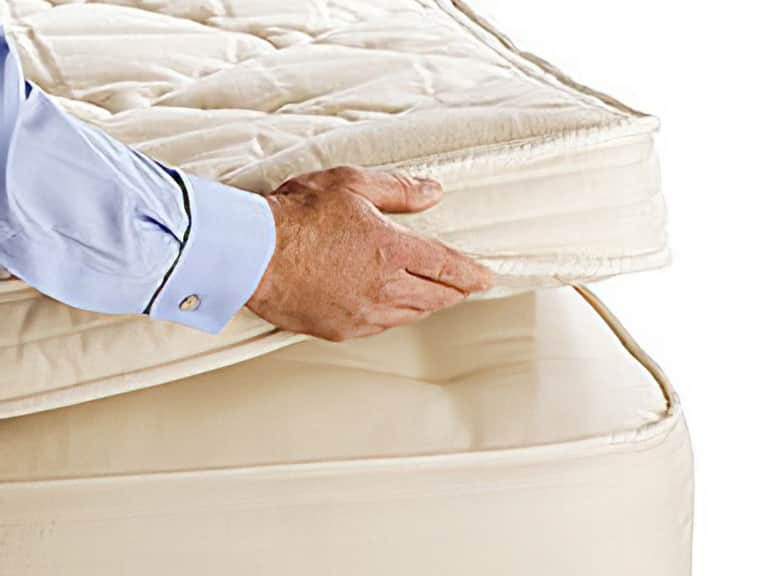
It is also worth separating the comforter from the mattress. Wool may appear in both, but its role differs. A wool layer inside a mattress contributes to the feel and composition of the sleep surface; wool in a comforter is the overhead insulating layer that rises and falls with the sleeper. A mattress topper changes cushioning and pressure distribution, while a comforter chiefly changes warmth, drape, and the atmosphere around the body. Knowing which part of the bed is causing discomfort helps avoid buying the wrong solution.
The quiet virtues of a well-kept layer
There is a certain appeal to bedding that asks for ordinary, attentive care rather than constant replacement. A wool comforter, kept dry, protected by a cover, and cleaned according to its instructions, may remain useful for years; its actual lifespan depends on materials, construction, and use. Natural origin alone does not guarantee durability, and no fiber is immune to wear. The seams, shell, and quality of the fill matter just as much as the name on the label.
Wool’s pleasures are not spectacular. They are measured in the feeling of a bed that is warm without being suffocating, substantial without being rigid, and comfortable across the small temperature shifts of a night. For some sleepers, that balance is precisely the point. For others, a lighter or more easily washed comforter will make more sense. The sensible choice is not the one with the most elevated description; it is the one whose warmth, texture, care demands, and construction suit the room and the person sleeping in it.
That is the useful way to think about wool bedding: not as a cure, a status symbol, or a universal answer to restless nights, but as a material with distinctive strengths and practical limits. Understand the fill and its weight, let the care label have the final word, and treat temperature as a matter of the whole sleep environment. The comforter can then do what a good comforter ought to do—settle into the background, and let the night proceed.
Frequently asked questions
Are wool comforters too warm for summer?
Not necessarily, but warmth depends on fill weight, room temperature, the cover, and individual preference. A lighter wool comforter may work for some sleepers in mild weather; others will prefer a thinner blanket or no comforter during hot periods.
Can you machine wash a wool comforter?
Only if its care label allows it. Wool comforters differ in fill, stitching, and shell construction. Use the specified cycle and detergent, or choose the recommended professional cleaning method. Do not assume that a washable wool garment and a wool comforter can be treated alike.
Does wool help with night sweating?
Wool can manage moisture vapor and may feel less clammy to some sleepers, but it cannot prevent sweating or address its cause. If night sweating is persistent or accompanied by other symptoms, consider speaking with a healthcare professional.
Should a wool comforter be used with a duvet cover?
A duvet cover is often useful because it protects the comforter and can simplify routine washing. Check the maker’s guidance and choose a cover that fits without compressing the fill.