Bedding · Mattress construction · Sleep comfort
Inside the Vispring Baronet Superb: How Mattress Construction Shapes Comfort
A mattress name can sound like a promise. The construction underneath it is where the promise has to become practical: a surface that feels inviting, supports the body, and suits the particular way someone sleeps.
Published October 17, 2026
The Vispring Baronet Superb is the kind of mattress that attracts attention before a sleeper has had the chance to lie down. Its name suggests ceremony, perhaps even a bedroom with an unusually strict dress code. But a name, however polished, cannot tell you whether a mattress will feel buoyant or yielding, whether it will ease pressure at the shoulder, or whether it will suit someone who sleeps on their side and wakes, with grim regularity, on their back.
Those questions belong to construction. A mattress is not one material so much as a small landscape of materials and mechanisms: a support core, layers of upholstery, a fabric cover, and finishing details that help the parts work together. The way these elements are arranged can influence how the surface responds to weight, how readily it gives at the hips and shoulders, and whether movement on one side is felt on the other. Understanding those relationships is more useful than treating “luxury” as a synonym for “comfortable.”
This guide uses the Baronet Superb as a starting point for a broader, more practical inquiry into mattress construction. Specifications can vary by size, market, and model revision, so shoppers should confirm the current details with the manufacturer or retailer rather than assume that every description online refers to the same configuration. The more durable lesson is how to read those details—and how to connect them to the body that will sleep on the bed.
Begin with the support system
The support core is the mattress’s underlying structure. In a pocket-spring design, individual springs sit in fabric pockets and respond to pressure separately, at least to a degree. The basic idea is straightforward: rather than a single interconnected spring unit moving as one broad surface, different parts of the mattress can compress in response to different parts of the body. In practice, how this feels depends on much more than the mere presence of pocket springs.
Spring count is often given a starring role in mattress descriptions. It can be informative, but it is not a verdict. Counts may refer to a particular size, to a layer or layers combined, or to a particular unit within a mattress. More springs do not automatically mean more comfort, better alignment, or longer life. Wire gauge, spring shape, tension, arrangement, and the upholstery above the springs all matter. So does the sleeper. A structure that feels responsive and supportive to one person may feel too firm or too active to another.
When reviewing the Baronet Superb’s current product specification, look for clear information about its spring system, the size used for any stated spring count, and the available tension or firmness choices. If a listing gives a figure without explaining what it counts, ask for clarification. A technical number can create an impression of precision while leaving the central question unanswered: how does the bed behave beneath a person’s weight?
The upholstery layers are part of the experience
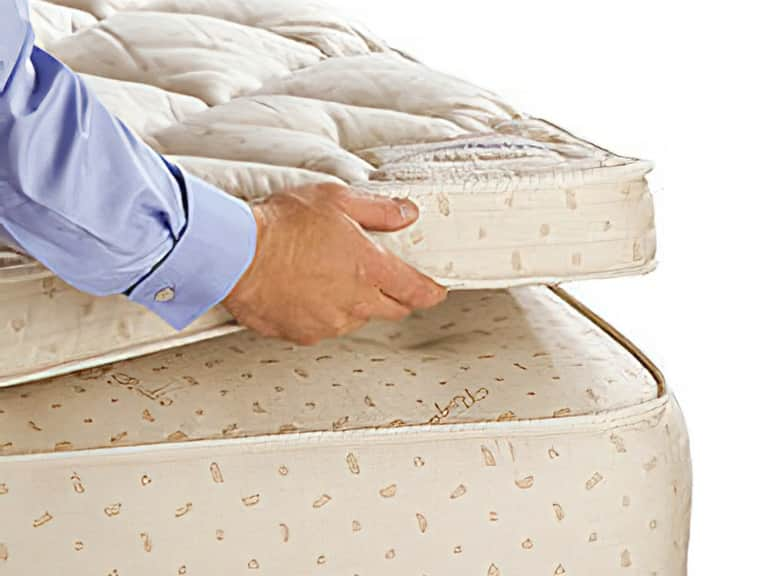
People often describe a mattress as “firm” or “soft” as if it were a single, fixed quality. Yet the first impression—the sensation of the surface giving under the body—is shaped substantially by the upholstery layers above the support core. These may include natural fibres, foams, or combinations of materials. Their type, thickness, and arrangement influence the initial cushion, the amount of sink, the speed of recovery, and the way pressure is spread across the surface.
A mattress can have a resilient underlying structure and still feel plush at first contact if its upper layers compress readily. Conversely, a mattress with less surface cushioning may feel immediately taut even when its support system is designed to flex beneath heavier areas. This is why the word “firm” can mislead. It may refer to a manufacturer’s tension option, the sensation of the top layer, or a retailer’s broad category. These are related ideas, but they are not identical.
Natural fillings are often discussed in terms of their character: wool may contribute softness and help manage moisture; cotton can add structure; horsehair is commonly valued for resilience and airflow; silk, cashmere, or other fine fibres may be used for a particular surface feel. But the names of the fibres alone cannot reveal how the whole mattress will feel. A filling’s quantity, preparation, placement, and interaction with the spring unit all contribute. Nor does a natural-fibre label, by itself, establish that a mattress is cooler, healthier, or more durable for every sleeper.
For the Baronet Superb, that means reading past a list of materials. Look for descriptions of how those materials are layered and what role they are intended to play. If the product information is limited, a retailer may be able to supply a construction sheet or clarify how the model differs from other mattresses in the same range. The useful answer is not simply “what is inside?” but “what is each layer doing, and what might I notice?”
Support and pressure relief are related, not interchangeable
Support is sometimes mistaken for hardness. In a mattress context, support is better understood as the bed’s ability to hold the body in a comfortable, reasonably aligned position. Pressure relief concerns the way the mattress yields at areas that press more firmly into the surface, such as the shoulders and hips. A bed can feel hard without supporting a particular sleeper well; it can also feel soft at the surface while still offering a stable foundation beneath.
Sleep position changes the demands placed on those layers. Side sleepers often need enough give around the shoulder and hip to avoid feeling wedged against the surface, while still receiving support through the waist and torso. Back sleepers may prefer a surface that cushions the lower back without allowing the pelvis to sink excessively. Stomach sleepers commonly need a more even, stable feel beneath the midsection. These are tendencies, not laws: body shape, weight, mobility, and individual comfort all alter the equation.
The most informative trial is an unhurried one. Lie in your usual position, then shift into the positions you commonly adopt during the night. Notice whether pressure builds at the shoulder, hip, or knees; whether the lower back feels comfortably supported; and whether changing position takes effort. A quick sit on the mattress edge, or a few seconds on your back while fully dressed, offers very little evidence. If you share the bed, both sleepers should test it, because their preferences and body sizes may differ.
Firmness is personal—and labels travel poorly
There is no universally reliable scale that makes one maker’s “medium” equivalent to another’s. A firmness label can be a useful starting point within a specific product range, but it should not be mistaken for a standardized measurement across brands. Two mattresses described as medium may feel quite different because their support systems, upholstery, and surface finishes are unlike one another.
Body weight also affects perception. A lighter sleeper may not compress the upper layers as much as a heavier sleeper, making the same mattress feel firmer. A person with broader shoulders or hips may experience pressure differently from someone with a straighter frame. Even expectations can shape the first impression: someone accustomed to a deeply cushioned bed may interpret a responsive, flatter surface as hard, while another sleeper may find the same surface reassuringly stable.
If a model is offered in several tension choices, make sure you understand whether the selection refers to the mattress alone, whether it can be specified separately on each side of a shared bed, and what the manufacturer means by each term. Ask about the return or comfort-exchange policy before purchase. A premium mattress is still a poor match if its feel is wrong, and the ability to change course is part of the practical decision.
Construction details that deserve a closer look
Beyond the spring unit and upholstery, several details can affect everyday use. Edge construction matters to people who sit on the side of the bed, sleep near the perimeter, or want to use the full surface. Side stitching, border reinforcement, and the design of the edge may help maintain stability, but descriptions vary, and an advertised feature is not a substitute for testing the edge in person.
Hand tufting, when included, is a method of securing layers through the mattress to help limit movement within the upholstery. It can be associated with a particular traditional construction, but it does not guarantee a specific firmness or comfort level. The cover and ticking matter too. Their weave, finish, and care requirements influence how the surface feels and how the mattress should be maintained. Ask whether the mattress needs rotating, whether it can be used on a particular type of base, and whether a protector is recommended.
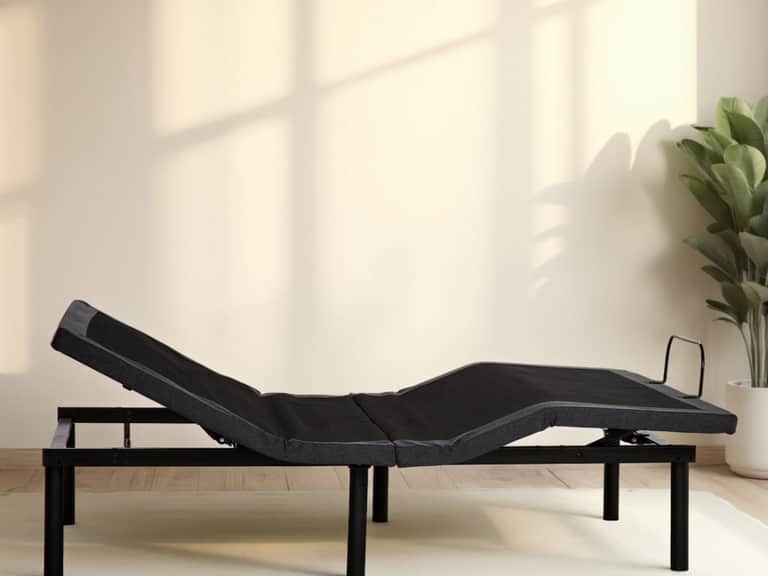
Compatibility with the foundation is not an afterthought. A mattress designed for a particular support base may perform differently on a flexible slatted frame, a solid platform, or an adjustable base. Check spacing and support requirements rather than assume that a mattress will work equally well on every frame. For a two-sided mattress, ask whether it should be turned as well as rotated; for a one-sided design, confirm the rotation schedule. Follow the maker’s instructions, since care guidance depends on the construction.
A Vispring comparison, without conflating models
Other mattresses made by the same manufacturer can offer a useful example of why model names and construction should be kept distinct. The Vispring Opulence mattress, for instance, is described in its product information as using a three-layer, hand-nested pocket-spring construction and natural-fibre upholstery. Those details belong to the Opulence description; they should not be transferred to the Baronet Superb simply because both mattresses carry the Vispring name.
This distinction is easy to lose in search results, where product pages, retailer summaries, and older specifications may appear side by side. Similar words—“hand nested,” “natural fillings,” “pocket spring”—do not establish that two models share the same construction or feel. A useful comparison sets out the verified specifications of each model next to one another, then asks what those differences might mean for the particular sleeper. It does not borrow the most impressive number from one listing and quietly assign it to another.
A practical checklist for evaluating the Baronet Superb
Before deciding, gather the model-specific information and test the mattress in conditions that resemble your real use. A concise checklist can keep a showroom conversation from dissolving into a tour of adjectives:
- Confirm the exact model and specification. Check the product name, size, current construction details, and whether the information applies to the version being offered in your market.
- Ask what the spring count represents. Establish the mattress size used for the count and whether it refers to one layer or a combined system.
- Clarify the tension options. Find out what each option means and whether different tensions are available for partners sharing a mattress.
- Test your usual sleep positions. Give your shoulders, hips, and lower back time to settle; notice both pressure and ease of movement.
- Check the edge and the foundation requirements. Consider how you use the perimeter and whether your existing bed base is suitable.
- Read the care and exchange terms. Ask about rotation, turning, mattress protectors, delivery, trial periods, and the process for resolving a comfort mismatch.
What “luxury” can—and cannot—tell you
Luxury in a mattress often describes a combination of materials, workmanship, brand positioning, and price. It does not promise that a particular sleeper will find the bed comfortable. A carefully made mattress can still feel wrong for someone’s posture or preference; a modestly appointed mattress may suit another sleeper beautifully. Price and prestige are part of a product’s story, not a substitute for fit.
It is also helpful to separate comfort from claims about health. A well-matched mattress may make it easier to settle and remain comfortable, but a mattress alone cannot diagnose or treat a sleep disorder, chronic pain, or another medical condition. Persistent pain, numbness, or serious difficulty sleeping merits advice from an appropriate health professional. Product descriptions should be read as information about materials and design, not as clinical promises.
The final test is the sleeper, not the specification sheet
Construction matters because it gives a shopper a way to reason about comfort before, during, and after a trial. Springs influence responsiveness; upholstery shapes surface cushioning; edge design and finishing affect use and durability; the foundation helps determine how the whole assembly performs. None of these elements, considered in isolation, can answer the question that matters most: will this bed feel good to you, night after night?
For the Vispring Baronet Superb, the sensible approach is neither to be dazzled by the name nor to dismiss it. Verify the current specification, understand how its layers are intended to work, and test the mattress in your own sleeping positions. Compare its feel with alternatives rather than relying on a firmness word or a spring count. A mattress is a remarkably intimate piece of engineering: its success is measured not by how grandly it is described, but by whether the person lying on it can stop thinking about the mattress and go to sleep.